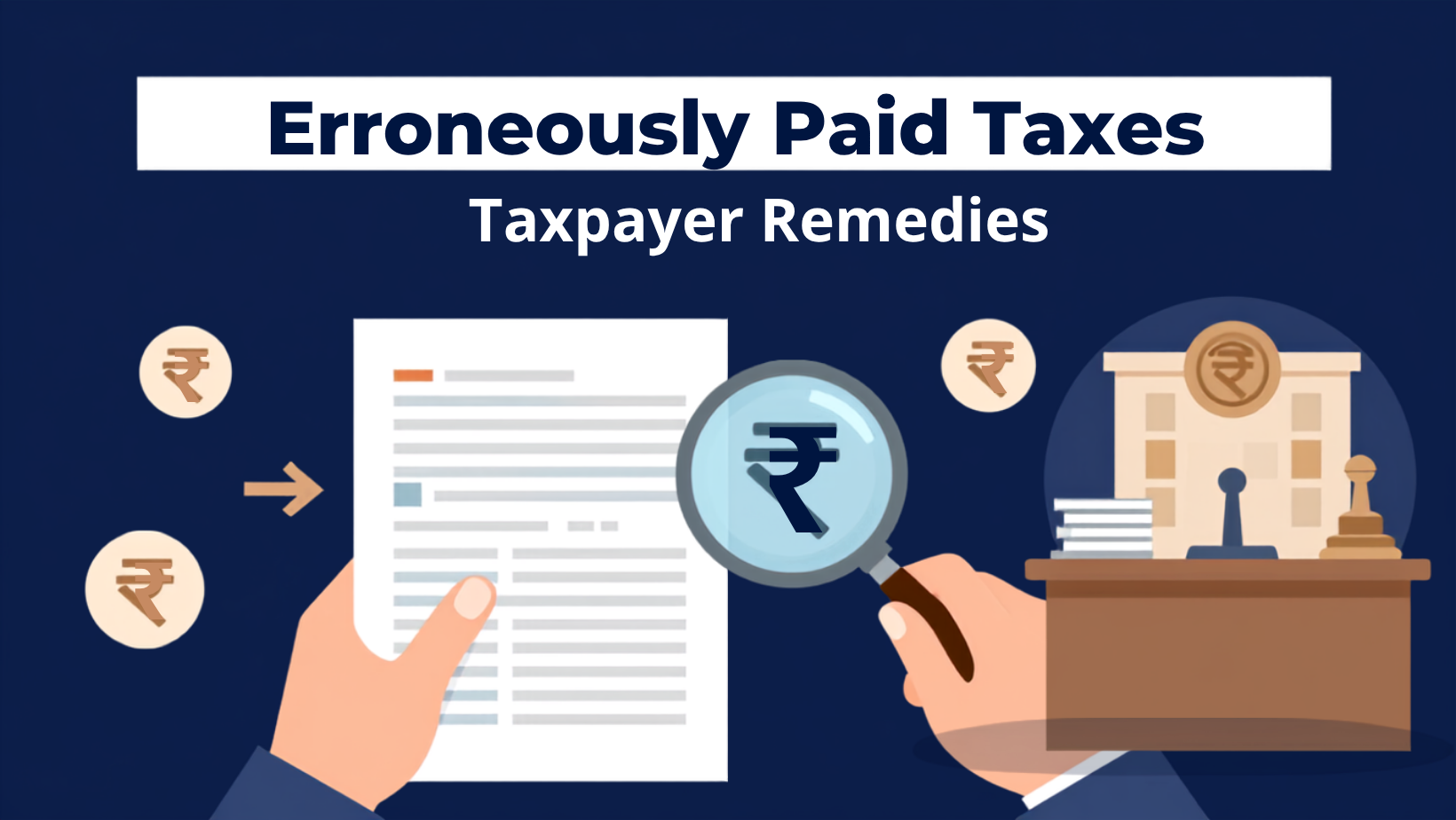
“The biggest tax problem isn’t always the tax itself—sometimes it’s the system behind it.”
Every year, thousands of Filipinos unknowingly pay taxes they shouldn’t have paid. Some pay the wrong amount. Others pay under the wrong tax category. Some even discover years later that they were entitled to a refund all along.
The law recognizes that taxpayers may recover taxes that were erroneously or illegally collected, provided they satisfy the legal requirements and timelines. Recent tax reforms have also aimed to simplify and streamline this process, making it more accessible for taxpayers.
For many people, this sounds like a legal or accounting issue.
As someone working in Information Technology, I see something entirely different.
I see a technology problem waiting to be solved.
Behind Every Tax Error is Usually a Process Problem
Tax mistakes rarely happen because people want to make mistakes.
They happen because systems are:
- Complicated
- Manual
- Difficult to understand
- Poorly integrated
- Not user-friendly
A wrong dropdown.
An outdated tax table.
Duplicate records.
Human encoding errors.
Missing validation.
Lack of automated checking.
One tiny software issue can eventually become thousands—or even millions—of pesos in erroneous tax payments.
This is where IT professionals become more than coders.
We become problem solvers.
Software Developers Don’t Just Build Systems
We Build Trust.
Imagine if every tax filing system could automatically:
✅ Detect duplicate payments
✅ Warn users before submitting incorrect tax classifications
✅ Validate taxpayer information in real time
✅ Explain tax rules using AI assistants
✅ Recommend the correct tax form
✅ Notify taxpayers of possible overpayments before filing
Instead of fixing problems years later, technology could prevent them from happening in the first place.
That’s the true value of digital transformation.
Artificial Intelligence Can Make Taxation Less Intimidating
Many Filipinos are afraid of taxes—not because they refuse to comply, but because they’re afraid of making mistakes.
Imagine asking:
“Am I using the correct BIR form?”
or
“Do I qualify for a tax refund?”
Instead of reading dozens of regulations, an AI-powered assistant could provide understandable guidance while reminding users that complex cases should still be reviewed by qualified professionals.
Technology doesn’t replace accountants or lawyers.
It empowers them.
The Future is Predictive, Not Reactive
Modern software can already detect unusual patterns.
Why not apply that to taxation?
Machine learning can identify:
- Suspicious duplicate filings
- Incorrect tax categories
- Possible refund opportunities
- Inconsistent taxpayer records
- High-risk compliance issues
Rather than waiting for audits years later, intelligent systems can alert taxpayers immediately.
That’s proactive governance.
Developers Can Help Government Serve Better
Digital government isn’t only about putting forms online.
It’s about creating services that are:
- Fast
- Accurate
- Transparent
- Secure
- Accessible
As developers, DevOps engineers, system analysts, QA engineers, cybersecurity specialists, and cloud architects, we all contribute to improving public service.
Every optimized API…
Every secure database…
Every automated workflow…
Every performance improvement…
Every accessibility enhancement…
…makes government work better for millions of people.
What Still Needs Improvement?
The Philippines has made significant progress in digital taxation, but several opportunities remain.
Better System Integration
Government agencies should exchange verified data securely instead of requiring citizens to repeatedly submit the same documents.
Better User Experience (UX)
Tax systems should be designed for ordinary citizens—not just tax experts.
Stronger Cybersecurity
As digital services grow, protecting taxpayer information becomes even more critical.
AI-Assisted Validation
Before taxpayers click “Submit,” intelligent systems should identify common mistakes.
Better Developer-Government Collaboration
Government agencies should continuously engage software professionals, UX designers, cybersecurity experts, and data engineers when modernizing digital services.
Technology should evolve with the people who use it.
Why This Matters to Every IT Professional
Many developers dream of building the next viral app.
But some of the most meaningful software isn’t glamorous.
It’s software that helps people.
A faster tax system.
A simpler government portal.
A safer payment platform.
An automated compliance checker.
A digital identity solution.
These may never trend on social media—but they can improve millions of lives.
That’s impact.
Final Thoughts
The discussion around erroneously paid taxes is more than a legal issue.
It’s a reminder that behind every government service is a technology ecosystem waiting to improve.
As IT professionals, we have the opportunity—and responsibility—to build systems that are smarter, simpler, and more human-centered.
The next breakthrough in public service may not come from a new law.
It may come from a developer who asked one simple question:
“How can I make this easier for everyone?”
And perhaps that’s one of the most valuable contributions technology can make—not just to government, but to every Filipino.
Join the Conversation
Do you believe software developers should play a bigger role in improving government digital services?
How can AI, DevOps, cloud computing, cybersecurity, and modern software engineering help make taxation simpler and more transparent?
Share your thoughts below.
#DigitalTransformation #GovTech #Philippines #SoftwareDevelopment #DevOps #ArtificialIntelligence #TaxTechnology #DigitalGovernment #Innovation #CloudComputing #CyberSecurity #UXDesign #Automation #FutureOfWork #ITProfessionals #OpenData #DataAnalytics #SmartGovernment #TechForGood #BuildTheFuture

Leave a Reply