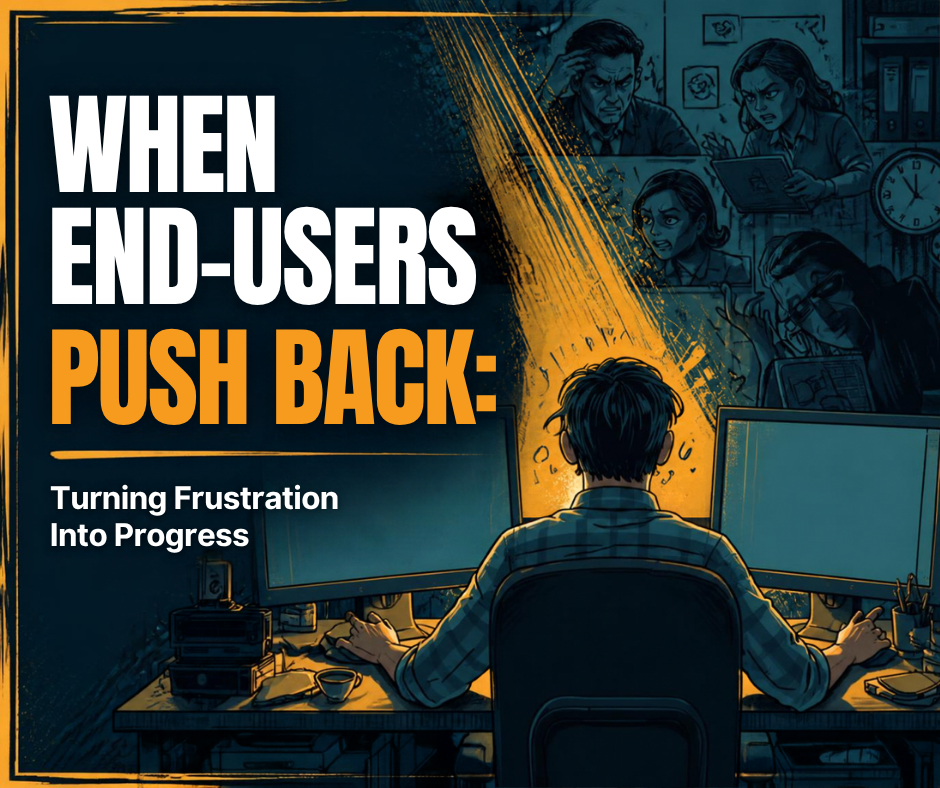
Every IT professional has probably heard this question:
“Why is this happening again?”
And every developer has probably thought:
“I thought we already fixed that.”
Welcome to the world of recurring issues.
A recurring problem is different from an ordinary bug because the first solution clearly did not completely eliminate the underlying cause.
Why Problems Come Back
A recurring issue may happen because:
1. The Original Root Cause Was Misidentified
The developer fixed what appeared to be the problem.
But the actual cause was somewhere else.
2. The Fix Addressed Only One Scenario
The system worked under one condition but failed under another.
3. The Data Was Never Corrected
The code may be correct, but existing records may still contain invalid or inconsistent information.
4. Another Process Reintroduces the Problem
An import process, API, scheduled job, or another application may be changing the data.
5. The Requirement Was Incomplete
Sometimes the system is technically doing what it was programmed to do.
The problem is that the original requirement did not fully describe what users actually needed.
Stop Asking “Who Caused It?”
Start Asking:
“What process allowed this to happen?”
That’s a major difference in professional problem solving.
Blaming a person may temporarily satisfy frustration.
Understanding the process can prevent the same problem from happening again.
For example:
Instead of:
“The user entered incorrect data.”
Ask:
“Why did the system allow invalid data to be entered?”
Instead of:
“The developer made a mistake.”
Ask:
“Why wasn’t the error detected during testing?”
Instead of:
“The client gave the wrong requirement.”
Ask:
“What process can we use to clarify requirements before development?”
Create a Problem History
For recurring issues, documentation becomes extremely valuable.
Record:
- Date reported
- Affected users
- Affected module
- Error message
- Steps to reproduce
- Previous fixes
- Root cause
- Temporary workaround
- Permanent solution
- Testing results
- Deployment date
This creates an incident history.
The next time the issue appears, you don’t start from zero.
Recurring Problems Are Data
A recurring problem is not simply another ticket.
It is information.
If the same issue happens five times, something in the process deserves investigation.
The question changes from:
“How do we fix this?”
to:
“Why does our environment keep producing this problem?”
That’s where IT moves from support toward engineering.
BugFixing #IncidentManagement #RootCause #DeveloperLife #ITSupport #SoftwareEngineering #SystemDevelopment #ContinuousImprovement #TechCareer #ITLife



Leave a Reply