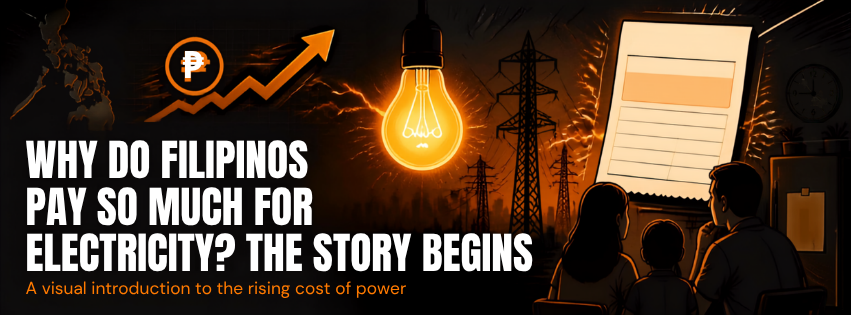
Every Electric Bill Tells a Story
Have you ever opened your monthly electric bill and wondered, “Why is electricity so expensive in the Philippines?”
For many Filipino families and businesses, paying for electricity has become one of the largest monthly expenses. Whether it’s running an air conditioner during the summer, powering a small business, or simply keeping the lights on, the cost of electricity affects almost every aspect of daily life.
The Philippines has often ranked among the countries with the highest electricity prices in Southeast Asia. While many people point to power distributors or rising fuel costs, the real answer is much more complex.
Today’s electricity prices are the result of decades of historical decisions, economic reforms, infrastructure development, population growth, and global market influences. Understanding this history helps explain why lowering electricity costs is far more challenging than it appears.
This article is the first in a series exploring how the Philippine energy sector evolved and what factors continue to shape electricity prices today.
The Beginning of Electricity in the Philippines
Electricity first became available in the Philippines during the Spanish colonial period. However, widespread electrification only accelerated in the early 1900s under American administration.
Initially, electricity served only selected urban areas, government facilities, and businesses. As cities expanded and industries grew, demand for reliable power increased rapidly.
For decades, expanding electricity access was seen as a symbol of national progress. New power plants, transmission lines, and distribution networks connected more communities across the country.
Yet building an electric power system required enormous investments—investments that would influence electricity prices for generations.
Growing Demand Means Growing Costs
As the Philippine economy developed, electricity consumption grew alongside it.
Population growth, industrialization, commercial centers, shopping malls, manufacturing plants, hospitals, schools, and millions of households all increased demand for power.
Meeting that demand required:
- Building new power plants
- Expanding transmission networks
- Maintaining distribution systems
- Purchasing fuel for power generation
- Training skilled engineers and technical workers
Each of these activities carries significant costs that eventually become part of the price consumers pay.
An Archipelago Comes With Unique Challenges
Unlike countries connected by large landmasses, the Philippines consists of more than 7,000 islands.
Providing reliable electricity across an archipelago presents logistical and engineering challenges.
Power plants cannot simply supply every island through one interconnected network. Many provinces require separate facilities, submarine cables, or smaller isolated power systems.
Remote communities often have fewer consumers sharing the cost of maintaining electrical infrastructure, making electricity more expensive to deliver.
Geography alone does not explain high electricity prices, but it is one important factor that makes nationwide electrification more costly.
Dependence on Imported Fuel
Another significant factor is fuel.
The Philippines has long relied on imported coal, oil, and other energy resources to generate a large share of its electricity.
When international fuel prices rise or when the Philippine peso weakens against the U.S. dollar, electricity generation becomes more expensive.
These global market movements eventually affect electricity prices paid by consumers.
This means that events happening thousands of kilometers away—such as geopolitical conflicts, supply disruptions, or fluctuations in commodity markets—can influence your monthly electric bill.
More Than Just Power Plants
Many people assume that paying an electric bill only covers electricity generation.
In reality, several components contribute to the final amount consumers pay, including:
- Electricity generation
- Transmission
- Distribution
- System maintenance
- Taxes and government-mandated charges
- Universal charges and other regulatory fees
Each component exists for a specific purpose within the country’s power system.
Future articles in this series will explain these charges in greater detail and examine how various policies have shaped today’s electricity market.
Why Understanding the Past Matters
Discussions about electricity prices often become emotional because the issue affects every Filipino household.
However, finding effective solutions requires understanding how the current system developed.
The Philippine power sector has undergone multiple transformations over several decades. Some reforms successfully expanded electricity access. Others addressed immediate problems but introduced new long-term challenges.
Looking at the historical context allows us to evaluate today’s issues more fairly and identify realistic opportunities for improvement.
What Comes Next?
In next week’s article, we’ll look at one of the most important chapters in Philippine energy history:
The Rise and Fall of the National Power Corporation (NAPOCOR).
We’ll explore why the government invested heavily in power generation, how rapid expansion transformed the country’s energy sector, and how financial pressures eventually changed the direction of Philippine electricity policy.
Understanding that story is essential to understanding why electricity costs what it does today.
Final Thoughts
Electricity powers our homes, businesses, schools, hospitals, and the digital economy. While high electricity prices remain a concern for many Filipinos, the issue did not emerge overnight.
It is the product of historical development, geographic realities, economic decisions, infrastructure investments, and changing energy markets.
By examining these factors one step at a time, we can move beyond assumptions and better understand the challenges—and opportunities—that lie ahead.
Thank you for reading Part 1 of this series. If you found this article informative, consider sharing it with friends and colleagues. Join the conversation in the comments: What part of your electric bill would you like to understand better?
#Philippines #EnergyPH #Electricity #PowerCrisis #ElectricBill #Meralco #RenewableEnergy #EnergySecurity #PhilippineEconomy #CostOfLiving


Leave a Reply