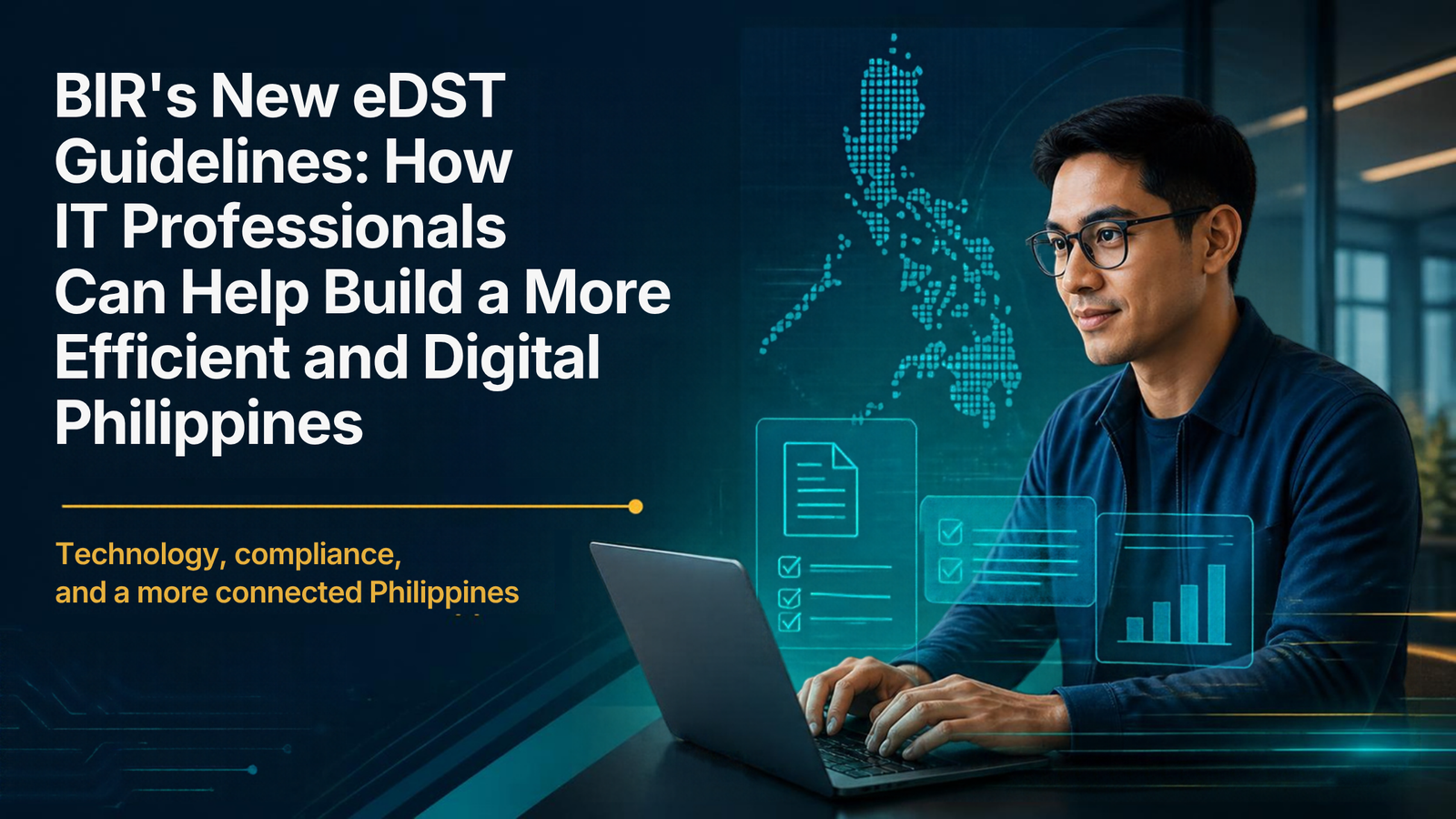
Introduction: Digital Transformation Is Everyone’s Responsibility
The Philippines continues to move toward digital government services. From online banking to electronic payments, technology is changing how businesses operate and how people interact with government agencies.
One important development is the Bureau of Internal Revenue’s (BIR) updated guidelines for the Enhanced Electronic Documentary Stamp Tax (eDST) System.
According to the BIR’s Revenue Memorandum Circular (RMC) No. 107-2026, issued on October 1, 2026, covered taxpayers must follow clarified procedures for enrollment, system use, and compliance. The guidelines also address errors and technical problems that may affect transactions.
Covered taxpayers have until December 31, 2026, to enroll in the enhanced eDST system.
At first, this may appear to be a matter only for accountants, tax practitioners, banks, or government offices. However, I believe it also presents an opportunity for people working in Information Technology (IT) to make a real difference.
As an IT professional, I see digital compliance as more than a government requirement. It is an opportunity to improve business processes, protect information, reduce manual work, and help people become more confident in using technology.
What Is the Enhanced eDST System?
Documentary Stamp Tax (DST) is a tax imposed on certain documents and transactions under Philippine tax law.
The BIR’s eDST System provides an electronic way to affix documentary stamps to taxable documents. The enhanced system supports the government’s efforts to make tax administration more standardized, efficient, and secure.
Under the relevant rules, covered industries include financial institutions, insurance companies, shipping and airline companies, certain pre-need companies, educational institutions issuing covered taxable certificates, specified government agencies and local government units, and notaries public.
The rules may also cover other industries designated through the applicable regulations.
The updated guidance requires covered taxpayers to enroll in the Electronic Filing and Payment System (eFPS), use it to file BIR Form No. 2000 and pay the corresponding DST, and attend the required BIR orientation.
Notaries public have additional requirements, including individual eDST accounts and an updated BIR registration classification as a professional.
Important: Not every individual or business automatically falls under the same requirements. Taxpayers should confirm their coverage and obligations using the official BIR issuances or with a qualified tax professional.
Why Does This Matter to Businesses?
Digital compliance can create opportunities, but it also requires preparation.
Businesses may need to review their existing processes, assign responsible employees, organize their records, and make sure their systems and staff are ready.
Without proper preparation, organizations may experience delays, duplicate work, inaccurate records, or confusion about who is responsible for completing a transaction.
These challenges are not always caused by the technology itself. Sometimes, the real problem is a lack of training, unclear procedures, poor communication, or weak internal controls.
This is where IT professionals can help.
Five Ways IT Professionals Can Make a Difference
1. Help Businesses Prepare for Digital Compliance
Many business owners understand their operations but may not have enough technical knowledge to evaluate a new digital system.
IT professionals can help by identifying the relevant workflows, checking device and browser readiness, reviewing internet connectivity, and documenting the steps employees need to follow.
We can also help businesses prepare a simple compliance-readiness checklist.
For example, an IT department can coordinate with accounting to confirm who will access the system, who will review transaction records, and where supporting documents will be stored.
Our role is not to interpret tax law or replace accountants. Our role is to help ensure that the technology and business processes support the requirements correctly.
2. Automate Repetitive Tasks Where Appropriate
Manual work can lead to mistakes, especially when employees handle many documents and deadlines.
IT professionals can explore appropriate tools for reminders, document organization, workflow tracking, and internal reporting.
For example, a company might use a shared task tracker to monitor enrollment, training, document preparation, and unresolved technical issues.
Simple automation can help employees avoid missed tasks and give managers a clearer view of progress.
However, automation must not bypass official filing requirements, alter tax records improperly, or submit transactions without the required authorization.
The goal is not to automate everything. The goal is to make the correct process easier to follow.
3. Strengthen Cybersecurity and Data Privacy
Digital government services require responsible handling of information.
Tax-related records can contain sensitive business and personal information. Unauthorized access, weak passwords, phishing attacks, and careless file sharing can expose organizations to unnecessary risks.
IT professionals can help implement practical safeguards such as:
- Strong, unique passwords and multifactor authentication where supported.
- Role-based access so employees only access information they need.
- Regular software and security updates.
- Secure backups and controlled document storage.
- Employee training on phishing and suspicious links.
- Proper procedures for reporting security incidents.
We should also remind employees never to share passwords, one-time passwords (OTPs), or other authentication credentials with unauthorized people.
Digital transformation must go together with cybersecurity. A convenient system is not enough if users cannot trust it.
4. Provide Technical Support and Improve Problem Reporting
No digital platform is completely free from technical problems.
A user may experience a failed transaction, an unexpected error, a connectivity issue, or difficulty accessing an account.
The updated eDST guidance addresses procedures for errors and technical concerns, including the use of a BIR Contact Center Trouble Ticket Number in relevant cases.
IT teams can help users document problems clearly, record the time of the incident, capture appropriate error messages, and follow the official escalation process.
We should never assume that a failed screen means a payment or transaction did not happen. Before retrying, users should verify the transaction status through the appropriate official channel to avoid duplicate actions.
Good technical support is not just about fixing computers. It is about helping people recover safely and continue their work with confidence.
5. Make Technology Easier for Everyone
Digital services are useful only when people can use them correctly.
Some employees may be experienced with technology, while others may need additional guidance. Small organizations may also have limited IT resources.
IT professionals can bridge this gap by creating simple guides, conducting short training sessions, preparing frequently asked questions, and explaining technical steps in plain language.
Instead of telling a user to follow a complicated process, we can provide a clear, step-by-step guide.
Instead of blaming someone for making a mistake, we can identify why the mistake happened and improve the process.
This approach supports digital inclusion and creates a more productive working environment.
What Can I Personally Contribute as an IT Professional?
I believe that our contribution should go beyond maintaining computers, fixing network problems, or developing software.
We can help organizations understand technology, improve their operations, and use digital tools responsibly.
Here are practical actions I can take:
First, share verified information. I can help explain official BIR announcements in simple language while directing readers to the original government source.
Second, promote digital readiness. I can encourage covered organizations to review their processes, prepare their employees, and avoid waiting until the last minute.
Third, improve internal systems. Where appropriate, I can help build checklists, reminders, documentation, and reporting tools that support compliance.
Fourth, promote cybersecurity awareness. I can teach colleagues and business owners how to recognize suspicious messages, protect their accounts, and handle sensitive records responsibly.
Fifth, listen to users. Technology projects should not focus only on technical requirements. They should also consider the actual problems faced by the people using the system.
These contributions may appear small, but consistent improvements can create meaningful results.
Challenges We Should Not Ignore
Digital transformation also comes with challenges.
Some businesses have limited internet access, outdated equipment, or insufficient technical staff. Employees may resist new processes because they are unfamiliar with them. System interruptions can also affect productivity.
Government agencies and technology providers must continue improving reliability, usability, security, and technical support.
At the same time, businesses must invest in employee training, clear procedures, and responsible technology use.
We should remember that technology alone cannot solve every problem. Successful digital transformation requires cooperation among government agencies, businesses, IT professionals, accountants, and end users.
A Practical Action Plan Before December 31, 2026
If your organization may be covered by the enhanced eDST requirements, consider these steps:
- Confirm coverage. Check the applicable BIR rules and consult a qualified tax professional if necessary.
- Review enrollment requirements. Verify the required eFPS and eDST procedures through official BIR channels.
- Assign responsibility. Identify the employees responsible for registration, transactions, recordkeeping, and follow-up.
- Attend the required orientation. Make sure the appropriate personnel understand the official procedures.
- Prepare your IT environment. Review access controls, connectivity, software readiness, and secure document storage.
- Document issues. Establish a process for reporting errors and keeping reference numbers for support requests.
- Avoid last-minute compliance. Start early enough to resolve documentation or technical problems before the applicable deadline.
The deadline is December 31, 2026, but organizations should not wait until that date to begin preparing.
Conclusion: Technology Should Create Real Value
The BIR’s updated eDST guidelines are a reminder that digital transformation is not simply about replacing paper with electronic records.
It is about making processes more reliable, improving accountability, protecting information, and helping people work more efficiently.
As an IT professional, I can contribute by making technology easier to understand, supporting responsible automation, improving cybersecurity, and helping organizations prepare for digital change.
I may not be the person who interprets tax regulations or decides government policy. However, I can help translate technical requirements into practical solutions and help people use digital systems with greater confidence.
That is how I believe we can make a difference: one improved process, one informed user, and one secure digital transaction at a time.
What can you do today to help your workplace become more digitally ready?
Let’s share knowledge, improve our skills, and use technology to build a more efficient and digitally empowered Philippines.
Official References and Further Reading
- Bureau of Internal Revenue: 2026 Revenue Memorandum Circulars — see RMC No. 107-2026
- BIR: Revenue Regulations No. 28-2025 on the Enhanced eDST System
- BIR: eDST System and FAQs
- News background: GMA News — BIR sets new guidelines for eDST compliance
Disclaimer: This article is for general information and technology-awareness purposes. It is not tax or legal advice. Verify current requirements with the BIR or a qualified tax professional.
#DigitalTransformation #Philippines #ITProfessionals #BIR #TaxCompliance #Cybersecurity #BusinessAutomation #DigitalGovernment

Leave a Reply