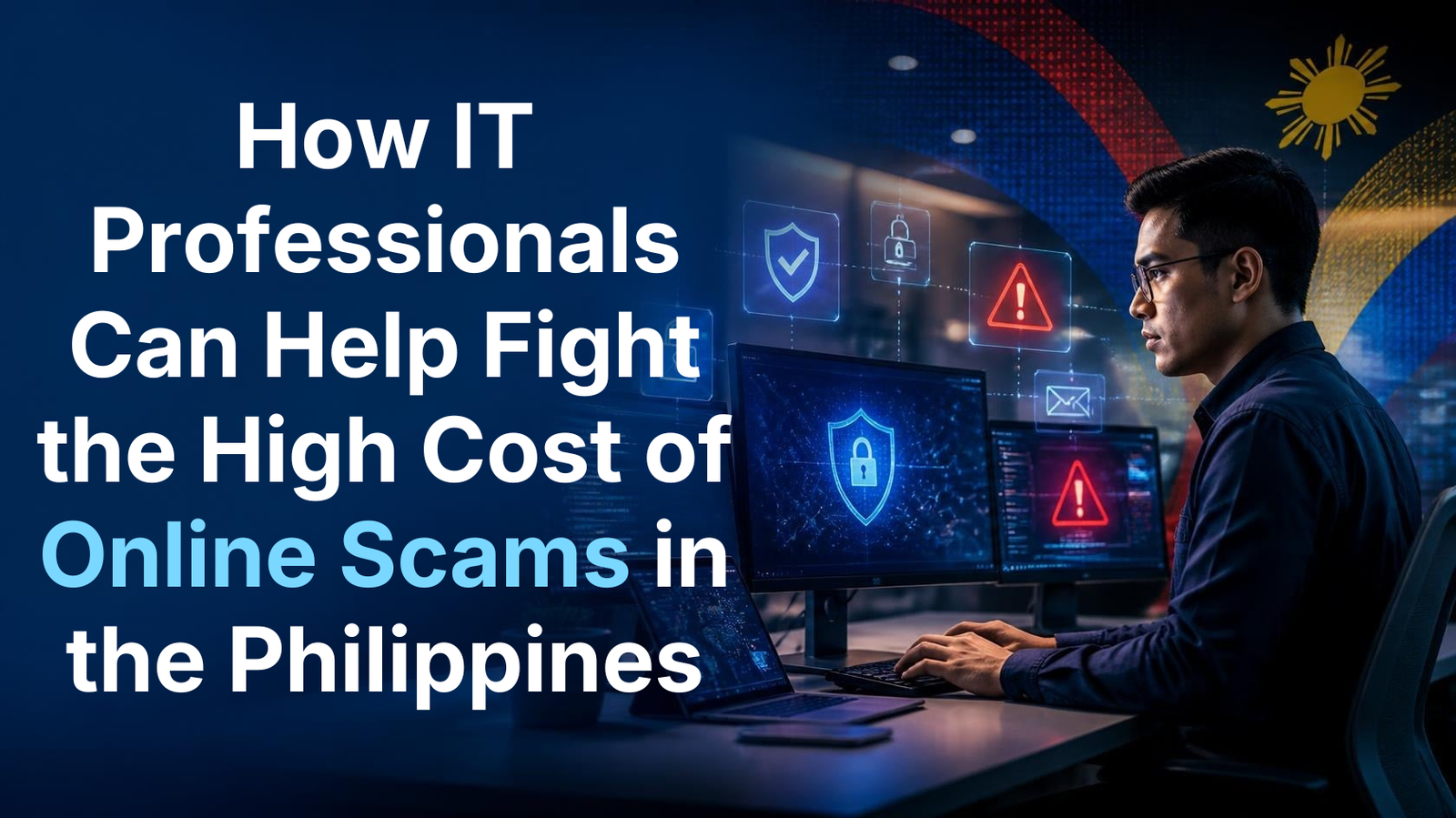
Introduction: The Real Cost of Being Scammed
The internet has made our lives easier. We can pay bills, shop online, transfer money, apply for jobs, and communicate with family using only our smartphones.
However, the same technology also gives scammers more opportunities to steal money and personal information.
Recent reporting on online scams in the Philippines highlights a serious problem. According to the State of Scams Philippines 2026 report, an estimated ₱121.8 billion in losses could be linked to scams over one year. This figure is based on survey responses extrapolated to the adult population, not a verified government total. The report also found that 84% of surveyed Filipino adults encountered a scam attempt during the past year. Source: Philippine News Agency
These numbers represent more than money.
Behind every scam victim is a person who may have worked hard for years to save money, support a family, pay school expenses, or prepare for retirement.
As an IT professional, software developer, and technology enthusiast, I believe we have a responsibility to help make the digital world safer.
We may not be able to stop every scammer, but we can help people become more informed, build safer systems, and promote responsible technology use.
1. Why Are Online Scams Becoming More Dangerous?
Online scams are no longer limited to suspicious emails from strangers.
Scammers can use social media, messaging applications, fake websites, digital wallets, and even artificial intelligence (AI) to make their schemes appear legitimate.
Here are some common examples:
- Phishing scams: Fake messages or websites designed to steal passwords, banking details, or other sensitive information.
- Online selling scams: Fake sellers collect payments but never deliver the promised products.
- Investment scams: Fraudsters promise unusually high returns with little or no risk.
- Job and task scams: Victims are promised easy income but are later asked to deposit money to unlock tasks or withdraw supposed earnings.
- Impersonation scams: Criminals pretend to be bank employees, government representatives, employers, friends, or relatives.
- AI-powered scams: Fraudsters may use AI-generated images, voices, or messages to make impersonation more convincing.
The danger is that these scams often look real.
A fake message may use a bank’s name. A fraudulent job offer may look professional. A scammer may even know personal information about the victim.
This means that being educated or working in technology does not automatically make someone immune to scams.
The best defense is a combination of awareness, verification, and better digital security.
2. How Can I Contribute as an IT Professional?
I may not work directly in law enforcement or cybersecurity investigation, but my background in programming, system development, and IT operations gives me practical ways to help.
A. Share cybersecurity knowledge in simple language
Technical knowledge becomes more valuable when ordinary people can understand and use it.
Instead of discussing complex security terms, I can explain practical habits such as:
- Never share a one-time password (OTP), PIN, or banking password.
- Verify suspicious messages through official channels.
- Avoid clicking unexpected links.
- Use unique passwords for important accounts.
- Enable multifactor authentication whenever available.
- Check website addresses before entering personal information.
- Be careful with offers that demand immediate payment.
I can share these lessons through my blog, Facebook posts, and conversations with colleagues, friends, and family.
The goal is simple: turn technical knowledge into everyday protection.
B. Build safer applications and websites
As a software developer, I understand that security should not be an afterthought.
Applications that handle personal information, payments, or user accounts must be designed with security in mind.
Developers can help by implementing:
- Secure authentication and account recovery.
- Proper input validation and access controls.
- Encryption for sensitive information where appropriate.
- Rate limits to reduce automated attacks.
- Logging and monitoring for suspicious activity.
- Regular dependency updates and security testing.
- Clear warnings when users perform sensitive actions.
For small businesses, even basic improvements can reduce risks.
A secure website protects not only the business owner but also customers who trust the platform with their information.
C. Use DevOps to improve security
My experience and interest in DevOps also provide opportunities to contribute.
DevOps is not only about automation, faster deployments, and system availability. It can also support security through practices commonly called DevSecOps.
For example, automated deployment pipelines can include code scanning, dependency checks, secret detection, and security tests before software is released.
Monitoring tools can help identify unusual activity. Backups and recovery procedures can reduce the impact of system failures or security incidents.
These controls do not guarantee that a system will never be attacked. However, they can help organizations detect problems earlier and respond more effectively.
For me, this is one way to make a meaningful contribution without needing to create an entirely new cybersecurity company.
3. Help Families and Small Businesses Stay Safe
Cybersecurity should not be limited to large companies or technical professionals.
Small businesses, online sellers, parents, students, and senior citizens also need protection.
I can help by offering simple digital safety reminders to people who may not have formal IT training.
For example, I can explain why a seller should verify payments inside the official financial application instead of trusting a screenshot sent by a buyer.
I can remind family members to contact a relative through a known phone number before sending money for an emergency.
I can help a small business owner secure an email account, enable multifactor authentication, update software, and establish a backup routine.
These actions may seem small, but they can prevent expensive mistakes.
Cybersecurity becomes more effective when people practice it together.
4. What Should We Do When Someone Gets Scammed?
We must also change how we respond to scam victims.
Some people feel embarrassed after losing money. Others fear being blamed for making a mistake.
Instead of judging them, we should help them act quickly.
If someone becomes a victim:
- Stop communicating with the scammer. Do not send more money to recover the supposed loss.
- Secure affected accounts. Change compromised passwords, terminate suspicious sessions, and contact the relevant bank or e-wallet provider.
- Preserve evidence. Save messages, screenshots, transaction references, account names, phone numbers, and website addresses.
- Report the incident. Contact the financial institution and appropriate authorities through their official channels.
- Warn others responsibly. Share verified information without exposing private details or making unsupported accusations.
Never assume that recovering stolen money is guaranteed. Act quickly and follow the instructions of the relevant institution or authority.
Victims need support, not shame.
5. My Contribution Starts With What I Can Do Today
As an IT professional, I do not need to wait for a major project or government program before making a difference.
I can start with three practical commitments.
First, educate. Publish simple articles and posts explaining common scams and ways to avoid them.
Second, improve. Apply security best practices to the websites, applications, and systems I develop or maintain.
Third, participate. Encourage responsible reporting, share verified cybersecurity advisories, and help people understand digital risks.
I can also continue learning about application security, secure coding, DevSecOps, and fraud prevention so that my knowledge remains useful as technology changes.
These actions can become part of my professional identity: not only someone who builds technology, but also someone who helps people use it safely.
6. Technology Alone Cannot Solve the Problem
Even the most advanced security system cannot eliminate every scam.
Technology must work together with public awareness, responsible businesses, financial institutions, telecommunications providers, and law enforcement.
Companies should protect customer data and provide clear ways to report suspicious transactions. Developers should build safer products. Financial institutions should help customers respond quickly to fraud. Citizens should verify information before acting.
Government agencies and industry groups must also improve coordination and make reporting easier.
The responsibility cannot fall entirely on the person who receives a suspicious message. Better systems and faster responses are also necessary.
A safer digital Philippines requires shared responsibility.
Conclusion: Let’s Make Digital Safety Everyone’s Responsibility
Online scams are not just a technology problem. They are a financial, social, and human problem.
Every peso lost may represent someone’s hard work. Every stolen account can damage a person’s reputation. Every successful scam can weaken public trust in digital services.
As a software developer and IT professional, I can contribute by building secure systems, sharing practical knowledge, and encouraging responsible digital behavior.
I may not be able to stop every scam, but I can help one person recognize a suspicious message, one small business improve its security, or one family protect its savings.
And if more of us take these small steps, our collective impact can grow.
My challenge to fellow IT professionals, developers, DevOps engineers, and digital citizens is this: Do not use technology only to make life faster. Use it to make life safer.
Let’s build a digital Philippines where innovation comes with responsibility, convenience comes with protection, and trust is something we actively earn.
What can you do today?
Share this article with someone who needs to learn about online safety. Tell us in the comments: What is one cybersecurity habit that you believe every Filipino should practice?
#OnlineScamAwareness #Cybersecurity #DigitalSafety #SoftwareDevelopment #DevOps #DataPrivacy #ScamPrevention #DigitalPhilippines #TechForGood

Leave a Reply